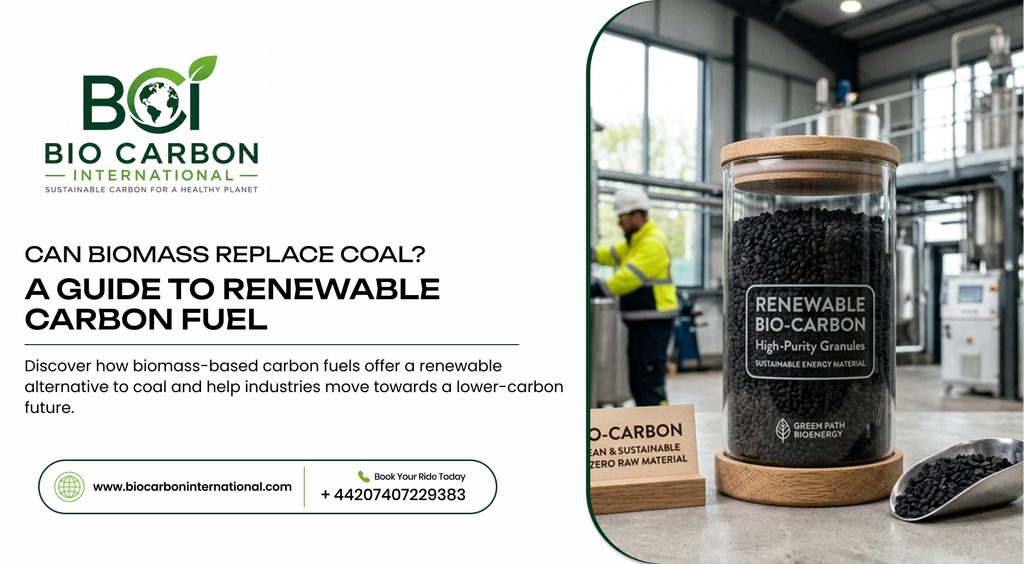
Short answer: Yes, in many applications. Biomass, once converted into bio carbon through thermochemical processes like pyrolysis, can replace coal in power generation, cement kilns, and parts of metallurgy. It cannot yet replace coal everywhere. This guide explains where it works, where it doesn’t, and what to check before you switch.
The 60-Second Answer (Read This First)
| Question | Quick Answer |
| Can bio carbon replace coal? | Yes, in power generation, heat, and many industrial processes |
| Can bio carbon replace coke? | Partially. It works well as a supplement or reductant in some metallurgical steps, but full replacement in blast furnaces is limited by strength requirements |
| Is it renewable? | Yes, when made from sustainably sourced biomass |
| Does it cut emissions? | Significantly, since the carbon was recently absorbed by plants rather than dug up from fossil deposits |
| Biggest hurdle | Consistent quality, supply scale, and cost |
What Is Bio Carbon?
Bio carbon is a carbon-rich solid material made by heating organic matter (biomass) with little or no oxygen. The result looks and burns a lot like coal, but its carbon comes from plants, not ancient fossil deposits.
You may also see it called renewable coal, bio coal, or a biomass coal substitute. They all describe the same idea: a renewable carbon material designed to do coal’s job.
What Is Bio Carbon Made Of?
Bio carbon is made from biomass waste, such as:
- Agricultural residue: rice husks, straw, nutshells, bagasse, corn stalks
- Forestry residue: branches, bark, thinning waste, logging leftovers
- Sawmill waste: sawdust, shavings, offcuts
- Dedicated energy crops: fast-growing grasses grown on marginal land
Using waste streams matters. It turns something that would rot, get burned in open fields, or fill a landfill into a useful product. That’s the circular economy in action.
How Is Bio Carbon Made?
The magic word is thermochemical conversion: using heat to transform biomass into a denser, more energy-rich solid. Three main routes exist.
1. Torrefaction (roughly 200–300°C)
A gentle “roasting” that dries the biomass and makes it brittle and easier to grind. The result is a better fuel than raw wood, but not as carbon-dense as the options below.
2. Pyrolysis (roughly 400–700°C+)
Heating without oxygen breaks biomass down into solid carbon, oil, and gas. The solid portion is the bio carbon. Higher temperatures generally produce higher fixed carbon and lower volatile content.
3. Carbonization
A broader term for converting organic material to carbon-rich char, often at slower rates and controlled conditions to produce consistent, high-grade material.
The process you choose decides the final specs: fixed carbon, ash content, calorific value, and strength. That’s why two products labeled “bio carbon” can behave very differently.
Bio Carbon vs Coal: A Side-by-Side Look
| Factor | Coal | Bio Carbon |
| Carbon source | Fossil (millions of years old) | Biomass (recently grown) |
| Net CO₂ impact | Adds new carbon to the atmosphere | Can be near carbon neutral over its lifecycle |
| Sulfur content | Often high | Typically very low |
| Ash content | Often high | Can be low ash with the right feedstock |
| Fixed carbon | High (anthracite especially) | Moderate to high, depending on process |
| Calorific value | High | Slightly lower to comparable, depending on grade |
| Supply | Established global network | Growing, but still scaling |
| Cost | Volatile, increasingly carbon-taxed | Often higher upfront, improving with scale |
The takeaway: bio carbon wins on emissions, sulfur, and sustainability. Coal still leads on established supply and, in some grades, energy density.
Bio Carbon vs Biochar: What’s the Difference?
People mix these up constantly. Here’s the simple version:
- Biochar is typically made for soil improvement and carbon storage. Its properties are tuned for porosity, nutrient retention, and stability in the ground.
- Bio carbon (as an industrial product) is tuned for energy and process performance: high fixed carbon, controlled ash, consistent calorific value, and handling strength.
They come from the same family of processes, but the target specs and end uses differ. Think of it as the same raw idea built for different jobs.
Where Can Bio Carbon Replace Coal?
Power Generation
Bio carbon for power plants can be co-fired with coal or used as a full coal replacement fuel in suitably adapted boilers. Its better grindability (especially torrefied material) lets many plants use existing milling equipment with modest changes.
Metallurgy
Bio carbon for metallurgy is one of the most exciting areas. It can serve as:
- A reductant in ferroalloy and silicon production
- A carbon additive in foundries
- A partial coke replacement material in sinter plants and some furnaces
Full coke replacement in a large blast furnace is harder, because coke provides structural support that weak carbon materials can’t. But partial substitution already cuts fossil carbon use meaningfully.
Cement and Industrial Heat
Kilns and boilers need high, steady heat. Bio carbon delivers that while lowering fossil emissions, which is a major lever for industrial decarbonization.
Agriculture, Water, and Environmental Uses
Beyond fuel, bio carbon products support:
- Soil enhancement and amendments
- Water filtration (carbon’s adsorption power removes contaminants)
- Environmental restoration, such as treating contaminated land
How Does Bio Carbon Reduce Emissions?
Three mechanisms do the work:
- Biogenic carbon cycle. The CO₂ released when you burn bio carbon was pulled from the air by plants not long ago. Coal releases carbon that had been locked underground for millions of years.
- Lower sulfur and often lower ash, which means fewer pollutants and easier compliance with air-quality rules.
- Waste utilization. Turning residues into fuel can avoid methane from decomposition and CO₂ plus particulates from open burning.
A fair caveat: the real carbon footprint depends on how the biomass is sourced, transported, and processed. Responsibly sourced residues give the best results. Clearing forests to make fuel does not. Look for suppliers who can document their feedstock and lifecycle emissions.
What to Check Before You Switch
Not all bio carbon is equal. Ask any bio carbon supplier or bio carbon manufacturer about:
- Fixed carbon %: higher usually means better performance
- Ash content: low ash bio carbon reduces slagging and waste handling
- Calorific value: confirm it matches your process needs
- Moisture and particle size: affects handling and combustion
- Feedstock traceability: proves sustainability claims
- Batch-to-batch consistency: essential for industrial performance
- Scalable manufacturing capacity: can they supply you reliably next year, not just this month?
- Regulatory compliance: certifications and documentation for your market
Pilot trials are smart. Test a blend first, measure results, then scale up.
Benefits of Bio Carbon
- Lower net greenhouse gas emissions
- Renewable, waste-based feedstock
- Very low sulfur
- Supports sustainability goals and ESG reporting
- Helps meet tightening regulations and carbon pricing
- Can be tailored to specific industrial needs
- Creates value from agricultural and forestry waste
Honest Limitations
- Supply chains are still maturing
- Price can be higher than cheap coal in markets without carbon pricing
- Some applications (like large blast furnaces) need further development
- Sustainability depends on responsible sourcing
Final Thoughts
So, can biomass replace coal? Where the technology and supply line exist, absolutely. Bio carbon won’t flip every furnace overnight, but it’s already a practical, proven step for power plants, metallurgy, and industry looking to cut fossil carbon. The smartest path is to start with a blend, verify quality, and scale as confidence grows.
If you’re exploring renewable carbon products for your operation, talk to a qualified bio carbon supplier about your specifications, request lab data, and run a pilot trial.
Frequently Asked Questions
What is bio carbon?
Bio carbon is a carbon-rich solid fuel and industrial material made from biomass through heating processes like pyrolysis or torrefaction. It serves as a renewable alternative to fossil carbon.
Can bio carbon replace coal?
Yes, in many uses including power generation, industrial heat, and certain metallurgical processes. It can be used as a full replacement or blended with coal, depending on the equipment and quality requirements.
Can bio carbon replace coke?
Partially. It works well as a reductant and carbon source in several metallurgical applications and as a partial substitute in others. Full replacement in blast furnaces is still limited by strength and structural needs.
Is bio carbon renewable?
Yes, provided it is made from sustainably sourced biomass such as agricultural and forestry residues that can be regrown or are produced as waste.
How does bio carbon reduce emissions?
It replaces fossil carbon with carbon that plants recently absorbed, so burning it doesn’t add new fossil carbon to the atmosphere. It also typically has lower sulfur and can cut emissions from waste decomposition or open burning.
What industries use bio carbon?
Power generation, steel and ferroalloys, foundries, cement, agriculture, water treatment, and environmental remediation.
What’s the difference between bio carbon and biochar?
Biochar is mainly designed for soil and carbon storage. Bio carbon for industry is engineered for fuel and process performance, with high fixed carbon, controlled ash, and consistent energy content.
Is bio carbon carbon neutral?
It can be close to carbon neutral on a lifecycle basis when sourced and processed responsibly. Results vary with feedstock, transport distance, and production energy.
Why choose bio carbon?
For lower emissions, regulatory readiness, and a credible path toward industrial decarbonization without rebuilding your entire operation